
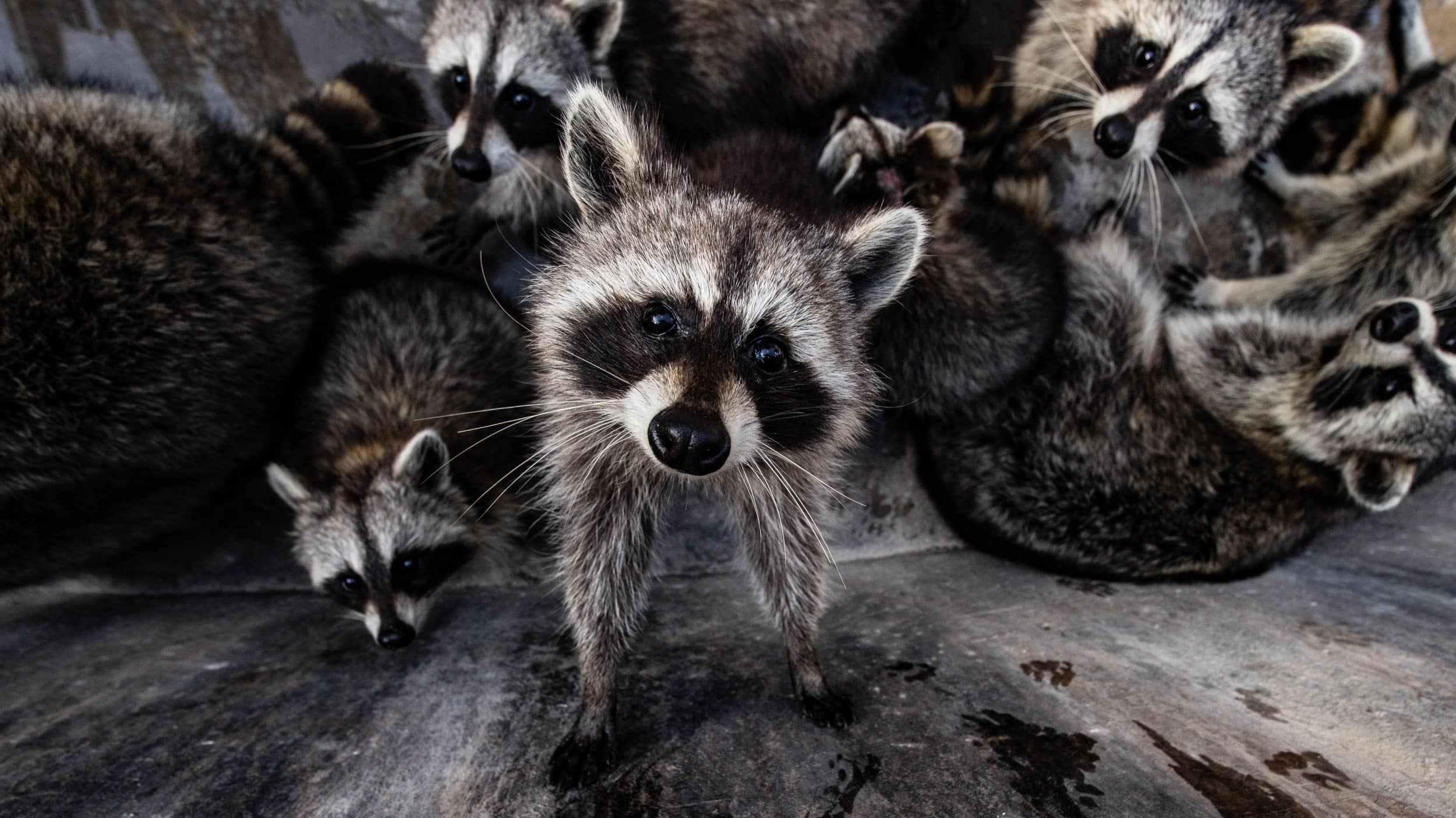
The quickest way to tell what’s in your attic is the time of day and the weight of the noise. Heavy thumps and dragging after dark usually mean a raccoon. Fast, light scratching at dawn and dusk points to a squirrel. Skittering all night is mice. Faint scratching or squeaking at dusk, with nothing in daylight, suggests bats.
Those first clues get most Grey-Bruce homeowners close. But the animal in your ceiling doesn’t announce itself, and two different critters can sound alike through a layer of drywall. This guide walks you through every clue that matters, so you can make a solid guess before you call anyone.
How do I tell attic animals apart by when I hear them?
Time of activity is the single best clue, because attic animals keep very different schedules.
- After dark, heavy and slow — raccoons are nocturnal. You’ll hear thumps, rolling sounds, and what sounds like a person walking around up there. Peak noise is right after sunset and again before dawn.
- Dawn and dusk, fast and light — squirrels are daytime animals. They’re loudest in the early morning as they leave and again in late afternoon as they return. Think quick scrambling and the sound of things being rolled across the ceiling (that’s them caching nuts).
- All night, tiny and constant — mice skitter, gnaw, and scratch inside walls and ceilings through the night. The sound is faint and quick, like dry rice being poured.
- At dusk, very faint — bats make soft scratching and high squeaking sounds, usually near the roofline. They’re silent during the day and get active as the sun goes down. On a warm evening you may see them leaving the roof.
- Daytime chirping — birds are active in daylight, especially early morning. Chirping, fluttering, and scratching near a vent or soffit usually means a nesting bird, not a mammal.
If the noise stops completely during the day and picks up at night, you’re almost certainly dealing with a raccoon, mouse, or bat, not a squirrel or bird.
How do the common attic animals compare?
Here’s a quick reference that lines up the most common Grey-Bruce attic animals by the clues you can actually check yourself.
| Animal | When you hear it | Droppings | Entry hole | Tell-tale sign |
|---|---|---|---|---|
| Raccoon | Night; heavy thumps, dragging | Large, tube-shaped, like a small dog’s | Big — a torn soffit, ripped vent, or hole the size of a grapefruit | Flattened insulation, a strong musky odour, sometimes chittering kits |
| Squirrel | Dawn and dusk; fast, light | Small pellets, scattered, rice-to-raisin size | Round, about the size of a golf ball to a fist | Chewed wood at the entry, gnaw marks, nuts stashed in insulation |
| Mice | All night; tiny skittering | Tiny dark grains, like rice, everywhere | Dime-sized gaps around pipes, wires, and corners | Grease smears along beams, shredded paper nests, a musty smell |
| Bats | Dusk; faint scratch and squeak | Small, dark, crumbly, piled below the roost | Very small — a gap under a shingle or in the fascia | A dark stain or pile of droppings on the wall or ground below one spot |
| Birds | Daytime; chirping, fluttering | White-and-dark splashes near the entry | A vent, gap, or open soffit | Nesting material poking out of a vent; chirping chicks in spring |
One table won’t confirm the animal for certain, but it narrows five suspects down to one or two quickly.
What do the droppings and smell tell me?
Droppings are one of the most reliable clues, so it’s worth a careful look with a flashlight (never touch them with bare hands).
- Raccoon droppings are large and tube-shaped, often left in one spot they use as a latrine. They can carry roundworm, so leave cleanup to a professional.
- Squirrel droppings are small, hard pellets scattered around, a bit larger than mouse droppings.
- Mouse droppings are tiny, dark, and everywhere — you’ll find them along walls and in drawers, not just the attic.
- Bat droppings (guano) look like dark grains but crumble to dust when touched, and they pile up under one roost spot. Dried guano can carry the fungus that causes histoplasmosis, so don’t disturb it.
- Bird droppings are the white-and-dark splashes you’d expect, usually near a vent or nest.
Smell helps too. A strong, musky animal odour points to raccoons. A sharp, sour ammonia smell often means a build-up of droppings and urine from mice or a larger animal that’s been there a while.
What does the entry hole and damage tell me?
The size and style of the entry point tells you a lot, because each animal gets in differently.
- Raccoons are strong and destructive. They tear open soffits, pull off vent covers, and rip roof edges to make a hole. If the opening looks forced and large, think raccoon.
- Squirrels gnaw. Look for a clean, round hole with fresh chew marks around the edge, often where the roof meets the fascia. Squirrels also chew indoors, and gnawed wiring is a real fire hazard.
- Mice need only a gap the width of a pencil. They slip in around pipes, wires, and foundation corners.
- Bats use tiny gaps — under a shingle, a loose piece of fascia, or a crack where two rooflines meet. You often won’t find a “hole” at all, just a stained spot.
- Birds move into vents, open soffits, and gaps, and you’ll usually see nesting material sticking out.
Which animal is it, and what should you do next?
Once you’ve narrowed it down, here’s where to go next for the details on your specific visitor.
Raccoons
Heavy night noise, a big torn entry, and a musky smell almost always mean a raccoon — and in spring and early summer it’s often a mother with kits. Our guide to the signs of a raccoon in the attic walks you through confirming it and why a nesting mother needs a humane approach that keeps the family together.
Squirrels
Fast dawn-and-dusk activity with gnawed, round entry holes points to squirrels. If one has slipped down into a living space, here’s how to get a squirrel out of the house calmly and safely. And because they never stop chewing, it’s worth knowing how to remove a squirrel nest and prevent damage to your home before the gnawing reaches your wiring.
Bats
Faint dusk scratching, no daytime noise, and a small pile of crumbly droppings below one spot are classic bat signs. Bats are protected in Ontario and can only be removed at certain times of year using one-way doors, never by trapping. Read what to do when you see signs of bats in the house before you disturb anything.
Mice and birds
Mice give themselves away with all-night skittering and droppings throughout the house, not just the attic. Birds are a daytime, chirping, spring-nesting problem, usually in a vent or soffit.
One honest note on scope: mice and rats are pest-control work, not wildlife removal, and we don’t take those jobs — a pest-control company is who you want. We do take bird jobs in specific situations. Either way, the fix is the same shape: get them out, seal the entry points, clean up safely.
Not the attic? Check under the deck
If the noise and smell are coming from below the house instead of above, you may have a different visitor. A strong, lingering odour around a deck or shed often means a skunk has moved in underneath — here’s how to get rid of skunks under the deck humanely.
Why does a professional inspection confirm it for certain?
Clues get you close, but they don’t always get you all the way. A mother raccoon and a family of squirrels can both sound busy at dawn. Mice and young bats can both make faint scratching. And the animal you hear isn’t always the only one up there.
A hands-on inspection settles it. When we come out, we get into the attic, follow the droppings and damage, and find every entry point — including the small ones you can’t see from the ground. That matters because sealing four out of five holes just leaves the animal a way back in. We also check for a nest of young before we do anything, since removing a mother and leaving helpless kits behind is both inhumane and against the spirit of Ontario’s wildlife rules.
Our removals are humane and use no poison. We rely on one-way doors and exclusion — the animal leaves on its own and can’t get back in — and any relocation in Ontario is limited to one kilometre by law, so we work with proven prevention rather than long-distance trapping.
Frequently asked questions
How do I know if it’s raccoons or squirrels in my attic?
Timing and weight are the giveaways. Raccoons are heavy and active after dark, with loud thumps and a big, torn entry hole. Squirrels are light and fast, loudest at dawn and dusk, and leave a clean, gnawed round hole. If the noise is heavy and only at night, think raccoon; if it’s quick and during the day, think squirrel.
Is an animal in the attic dangerous to my family?
Most attic animals won’t come after you, but their mess can be a health concern. Raccoon droppings can carry roundworm, and dried bat guano can carry the fungus behind histoplasmosis, so don’t handle either. Chewed wiring from squirrels or mice is a genuine fire risk. If anyone is bitten or scratched, or a bat is found in a room where someone was sleeping, call Health811 about possible rabies exposure.
Can I just wait for the animal to leave on its own?
It’s not worth the wait. Animals settle in to nest, breed, and stay warm, and every day they’re up there means more droppings, more chewing, and more damage to insulation and wiring. Spring is especially risky because you may be dealing with a mother and her young. The sooner it’s handled humanely, the smaller the cleanup and repair.
How much does it cost to remove an animal from the attic?
It depends on the specifics — how many entry points there are, which animal it is, how much cleanup and repair the job needs, and how easy the access is. We look at the situation first, then give you a clear, honest quote up front so there are no surprises. Every attic is a little different, which is why we never guess a price over the phone.
Not sure what you’re hearing? We’ll figure it out
If you’ve read this far and still aren’t certain what’s living above your ceiling, that’s completely normal — and it’s exactly what we’re here for. The Critter Guy is family-run in Owen Sound, and we’ve been identifying and humanely removing raccoons, squirrels, bats, skunks, and birds across Grey-Bruce since 2005.
When you call, a real person answers — usually Dave or Roman, never an AI attendant or a call centre. We’ll talk through what you’re hearing, and if you’d like, come out and confirm it in person. You can get in touch any time or call 519-783-1575. We’re proud of our 4.6-star rating from 36 Google reviews — you can read a few on our testimonials page. Humane methods, no poison, and a clear quote up front.