
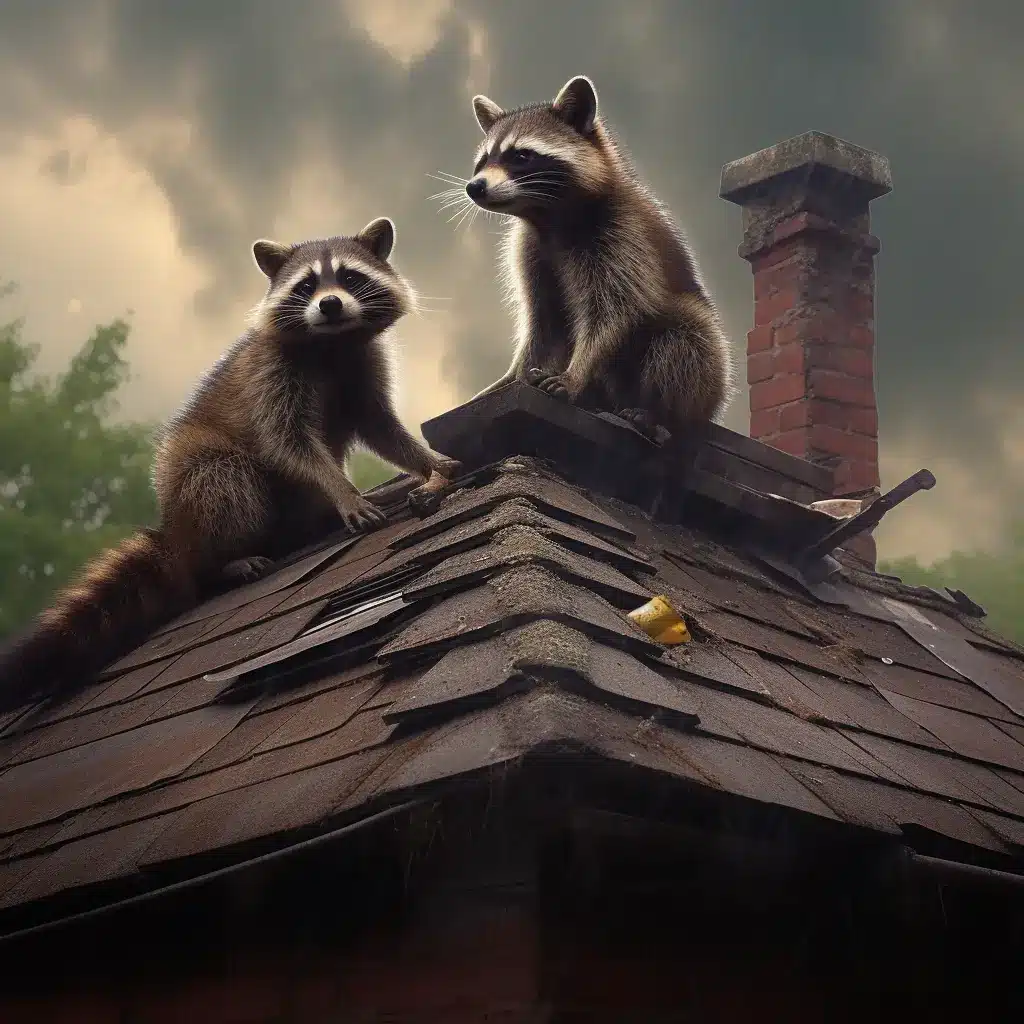
To get a raccoon out of your chimney, do not light a fire or try to smoke it out. In spring and early summer it is almost always a mother with babies who cannot climb out yet. The safe fix is humane removal by hand, reuniting the mom with her kits, then a proper chimney cap so it never happens again.
A raccoon in the chimney is one of the most common calls we get across Grey-Bruce, and it almost always scares homeowners more than it should. The good news: with the right steps, nobody gets hurt, the animals get out, and your chimney stays sealed for good. Here is exactly how it works.
Why raccoons love your chimney
A chimney is basically a hollow, sheltered tree to a raccoon. It is dry, it is warm, it is high off the ground away from predators, and the rough brick or clay flue gives a mother raccoon the perfect footing to climb up and down.
That last part matters. Female raccoons look for a safe, enclosed spot to have their litter in spring, and an uncapped chimney checks every box. This is not a raccoon that wandered in and got stuck. In most cases she chose your chimney on purpose as a den, or “birthing den.”
If you are hearing an animal above your damper in spring or early summer in Ontario, assume it is a mother raccoon with kits until proven otherwise.
Is it a raccoon, or birds or squirrels?
Before you do anything, confirm what you are actually dealing with. The sounds are a dead giveaway:
- Raccoons — heavy, deliberate scratching and shuffling, thumps, and low chittering or “purring.” At night you may hear the distinctive high-pitched chirps and trills of baby raccoons, which sound almost like birds but come in long, chattery bursts.
- Squirrels — fast, light scampering, usually busiest at dawn and dusk. Much quicker and lighter than a raccoon.
- Birds (often chimney swifts, which are protected) — fluttering wings, scratching, and rapid chirping, especially near the top of the flue.
If you are not certain, that is fine. The safe steps below are the same no matter which animal it is: keep the damper shut and do not try to force anything out. If you suspect a raccoon has moved from the chimney into your living space, our guide on the signs of a raccoon in the attic can help you tell where it has settled.
The one thing you must never do: smoke them out
We need to be blunt here, because this advice still shows up online and it is dangerous and cruel.
Never light a fire, and never try to smoke or force a raccoon out of your chimney.
Here is why:
- It traps the babies, who cannot survive it. Baby raccoons cannot climb out. A mother can flee the smoke, but her kits are stuck on the smoke shelf above the damper. Lighting a fire does not “encourage them out” — the kits are trapped and die in your chimney. Beyond being inhumane, a dead animal in a masonry flue means odour, flies, and a difficult removal.
- A panicked adult can end up in your home. A frightened raccoon does not always go up. If your damper is open even a crack, she may come down into the firebox and into your living room, which is far more dangerous for everyone.
- It is a genuine fire and health risk. Nesting material, fur, and droppings in a flue are flammable, and raccoon droppings can carry roundworm. Disturbing all of that with heat and smoke is the last thing you want.
Smoking, flooding, or poking at the animal is never the answer. Humane, hands-on removal is.
The safe steps a homeowner can take right now
You can make the situation safe and calm before a pro arrives. Here is what to do:
- Keep the damper closed. Do not open it to “take a look.” An open damper is the one path from your chimney into your house. Leave it shut.
- Confirm it is a raccoon using the sounds above. Listen for baby chirps, which tell you a litter is present.
- Do not light a fire, and turn off any gas fireplace. No heat, no smoke, no exceptions.
- Reduce noise and stress in the room. Keep pets and kids away from the fireplace. A calm, quiet room makes the eventual removal easier and keeps a nervous mom from bolting.
- Do not seal the top of the chimney yet. Capping or covering the flue while animals are inside traps them. Sealing is the last step, after everyone is out.
- Call a licensed humane removal pro. This is the point where a professional makes all the difference, especially during baby season.
That is genuinely all you should do yourself. A chimney raccoon is a rooftop job with a live animal and, usually, babies — it is not a DIY situation.
Why baby season changes everything
In Ontario, raccoon litters usually arrive in spring (roughly March–April), and the kits stay dependent on their mother through early summer. This is the single most important factor in a chimney call.
If we simply trapped and hauled away the mother and left, the babies would be orphaned in your flue — and Ontario limits wildlife relocation to 1 km anyway, so trucking a mom far away is not even legal or effective. The humane approach is different: we remove the kits by hand, get the mother out, and reunite them so she can move them to one of her backup dens on her own. Mother raccoons usually have several den sites and will move her family to one of them once your chimney is no longer an option.
If you want the bigger picture on why spring and early summer bring so many of these calls, our overview of spring wildlife baby season walks through what is happening and why gentle timing matters so much.
How humane removal actually works
Every chimney is a little different, but a proper humane removal follows the same logic:
- Assess from the roof and the firebox. We confirm the animal, check for a litter, and look at the condition of the flue and cap.
- Remove the kits by hand. During baby season, the babies are gently gathered first. This is delicate work and the reason smoking or trapping-and-leaving fails so badly.
- Get the mother out. With the kits secured, the mother is encouraged out or removed, then reunited with her young nearby so she relocates them herself, well within Ontario’s relocation rules.
- Clean up. Nesting material and droppings are cleared so odour and roundworm risk are dealt with properly.
- Seal it for good. Only once the chimney is empty do we install a sturdy, code-appropriate chimney cap so no raccoon, squirrel, or bird can get back in.
Raccoons are strong and persistent, so the cap has to be the real thing — a proper stainless steel chimney cap secured to the flue, not a piece of screen or hardware cloth that a raccoon can pry loose in a night.
Raccoon vs. squirrel vs. bird in the chimney
Here is a quick side-by-side to help you gauge what you are dealing with and how urgent it is.
| Raccoon | Squirrel | Bird (e.g. chimney swift) | |
|---|---|---|---|
| Sound | Heavy shuffling, thumps, low purring, chattery baby chirps | Light, fast scampering | Fluttering wings, rapid chirping high in flue |
| Most active | Night | Dawn and dusk | Daytime |
| Babies present? | Very likely in spring and early summer | Possible in spring | Yes — and swifts are protected |
| Can it climb out? | Adult yes, babies no | Often yes | Adults yes, chicks no |
| DIY safe? | No | No | No |
In every case, the answer is the same: keep the damper shut, do not force them out, and bring in a pro who removes them humanely.
Preventing the next raccoon
The chimney is often just one of several ways raccoons try to move onto a property. If one found your chimney appealing, it is worth checking the rest of the house. Raccoons also love the space beneath decks and additions — here is how to handle raccoons under the house and deck — and if you have heard activity overhead, our guides on how to get raccoons out of the attic cover that next-most-common den.
A few simple habits go a long way, and our tips on how to keep raccoons away cover the basics: secure garbage bins, take in pet food at night, and cap every opening — chimney, vents, and soffit gaps — before a raccoon finds them.
Frequently asked questions
Can I just wait for the raccoon to leave on its own?
Sometimes an adult without babies will move on in a few days, especially if you make the spot less appealing with light and radio noise near the firebox. But during spring and early summer, a mother will not abandon kits that cannot climb out, and waiting only lets odour, droppings, and stress build up. If you hear baby chirps, do not wait — call for humane removal.
Is it dangerous to have a raccoon in my chimney?
It is more of a health and fire risk than an immediate danger to you, as long as the damper stays shut. Raccoon droppings can carry roundworm, and nesting material in a flue is flammable, so you should not light a fire. If anyone is ever bitten or scratched, contact your local public health unit or Health811 about rabies exposure right away.
How much does it cost to remove a raccoon from a chimney?
It depends on the specifics — whether there is a litter, how the roof and flue are accessed, the cleanup needed, and the chimney cap. We look at your situation first and then give you a clear, honest quote up front, so there are no surprises before any work starts.
Will a chimney cap really keep them out?
Yes, as long as it is a proper, securely fastened stainless steel cap installed after the chimney is empty. Raccoons are strong and clever, so flimsy screen does not last. A quality cap also keeps out squirrels, birds, and rain, and it is the single best long-term fix for a chimney that has hosted wildlife once.
Talk to a real person
If you think there is a raccoon in your chimney, the fastest thing you can do is get in touch or call 519-783-1575. A real person — usually Dave or Roman — answers the phone. No call centre, no AI.
We are family-run out of Owen Sound, serving the Grey-Bruce region since 2005, with a 4.6-star rating from 36 Google reviews (read our testimonials). Every removal is humane, with no poison, and during baby season we always work to keep mom and her kits together. Keep that damper shut, skip the fire, and let us handle the rest.