
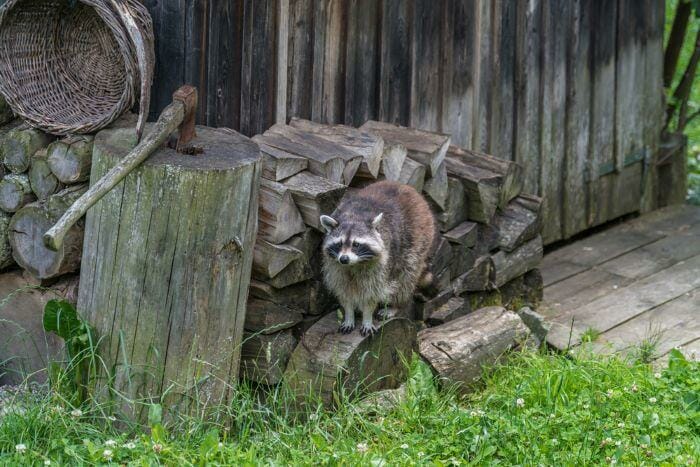
The best time to wildlife-proof your home is right now — late August through October. Squirrels, raccoons and skunks across Grey-Bruce are choosing their winter dens, and an animal that gets in this fall stays until spring. A walk-around inspection, secure vent covers, screened deck skirting and tidy yard habits will keep them out before the snow flies.
Every fall the calls follow the same pattern: noises on the roof in October, something definitely in the attic by November, and by January it’s been up there for months. The animal didn’t sneak in during a blizzard — it moved in quietly during the fall and settled in before winter locked down.
This is the checklist we’d walk through on your property — about an hour on a Saturday that can save you an entire winter of scratching sounds overhead.
Why is fall the deadline for wildlife-proofing in Ontario?
Wildlife runs on a calendar, and fall is house-hunting season.
- Squirrels spend September and October caching food and claiming warm, dry cavities — and your attic is the warmest, driest cavity on the street.
- Raccoons don’t truly hibernate, but they den up for the cold months. A female who settles in your attic this fall may still be there when she has kits in early spring — one animal becomes a family.
- Skunks dig in under decks, sheds and porches through September and October, then stay mostly put once the ground freezes.
Here’s what matters for your wallet: a den established in October is a much bigger job in January. In fall, the fix is often an inspection, a one-way door and some prevention screening. In midwinter, you’re dealing with a settled animal, ice making roof access harder, and months of accumulated droppings and insulation damage.
So the goal is simple: close the doors before anyone walks through them.
Step 1: How do animals get into the attic? Check soffits, fascia and vents
Grab a coffee, walk the full perimeter of your house, and look up. You’re checking the places where the roof meets the walls, because that junction is where most attic entries happen in Grey-Bruce homes.
Look for:
- Chewed or lifted soffit corners. Squirrels and raccoons both target the corner where two rooflines meet — the soffit there is often just thin aluminum over a gap.
- Gaps along the fascia. Ice and age pull fascia boards away from the roof edge, leaving a slot an animal can widen. If you can slide your fingers behind the fascia, a squirrel can get behind it too.
- Loose or damaged gable vents and roof vents. A raccoon can pull a plastic roof vent apart with its paws. Squirrels chew through vent louvres. If a vent looks bent, lifted or chewed, treat it as an open door.
- Overhanging branches. Any branch within about three metres of the roof is a highway. Trimming it back removes the easiest access route.
While you’re up there looking, listen too. Early-morning scampering usually means squirrels; heavy thumping at night points to a raccoon. If you’re already hearing activity, don’t seal anything — you likely have a tenant. Our guides on squirrels chewing wires and the signs of a raccoon in the attic will help you figure out who it is — squirrel chewing in particular is a genuine fire concern, not just a noise problem.
Step 2: Is something denning under the deck, shed or porch?
Fall is skunk denning season, and the space under a deck is prime real estate: dry, sheltered, and rarely disturbed. Walk around every deck, shed and porch on the property and look for:
- Fresh digging along the base — a smooth-sided hole about 10–15 cm across is classic skunk work
- Flattened grass paths leading to one spot
- A faint musky odour near the structure
- Gaps or holes in existing skirting
The fix is screening: heavy galvanized mesh attached to the frame and buried in an L-shape below grade, so animals can’t dig underneath it. It’s one of the most effective prevention jobs there is.
One critical caution: never screen a deck closed until you’re certain nothing is living under it. Sealing a skunk — or worse, a skunk with young — under your deck creates exactly the disaster you’re trying to prevent. If you see any of the signs above, read our guide on skunks under the deck first, or have a professional confirm the space is empty before the mesh goes on.
Step 3: How do I keep birds and squirrels out of my vents?
Dryer vents, bathroom exhaust vents and stove vents all push warm air outside — which makes them beacons for animals looking for a heated winter home. Birds are the most common squatters, but squirrels use them too.
This weekend:
- Check every vent flap. The louvres should close fully when the fan is off. A flap stuck open is an invitation.
- Look for nesting material. Straw or twigs poking out of a vent means someone already moved in — that needs removal before any cover goes on.
- Install proper vent guards. Purpose-made covers keep animals out while letting air flow. On dryer vents especially, avoid fine window-screen mesh — it clogs with lint and becomes its own fire hazard.
A blocked or bird-filled vent isn’t just a wildlife problem — it stops your dryer and bathroom fans from doing their jobs. Our post on birds in your vents covers what to do if you find a nest already in there.
Step 4: What’s attracting wildlife to my yard in the fall?
Animals den where the food is. If your yard feeds them all fall, your house becomes the obvious winter address. Before October:
- Bird feeders: clean up spilled seed, or take feeders down until winter — spilled seed feeds squirrels, raccoons and skunks more than it feeds birds.
- Pet food: never leave it outside overnight. Nothing draws raccoons and skunks faster.
- Garbage and compost: use bins with tight-fitting or locking lids, and store them inside until pickup morning if you can.
- Fallen fruit and gardens: pick up windfall apples and finished garden produce promptly.
- Brush piles and wood stacks: ready-made skunk and rodent shelters. Move firewood off the ground and away from the house.
None of this requires special gear — it’s just removing the reasons an animal would pick your property over the bush lot down the road.
Fall wildlife-proofing at a glance
| Animal | Where it dens for winter | Fall warning sign | The fix |
|---|---|---|---|
| Squirrel | Attic, soffits, wall cavities | Early-morning scampering; chewed soffit corners; branches touching the roof | Trim branches; repair soffit/fascia; one-way door if already inside |
| Raccoon | Attic, chimney, under additions | Night thumping; bent or torn roof vents; tracks on downspouts | Reinforce vents; secure garbage; humane eviction if denned |
| Skunk | Under decks, sheds, porches | Fresh digging at the base; musky odour; cone-shaped holes in the lawn | Buried mesh skirting — only after confirming the space is empty |
| Birds | Dryer, bathroom and stove vents | Chirping in walls; straw poking from vent flaps | Remove nesting, then install proper vent guards |
The one rule that prevents disasters: check before you seal
If you take only one thing from this checklist, take this: never seal an opening until you are certain nothing is inside.
Every fall we get calls from well-meaning homeowners who found a gap, stuffed it with steel wool or screwed a board over it, and trapped an animal in the wall or attic. The animal either does serious damage trying to get out — or it doesn’t get out. The dead animal smell that follows is one of the most unpleasant problems in this line of work, and it’s entirely preventable.
How to check: stuff the opening loosely with crumpled newspaper and wait 24–48 hours. If the paper stays put through two mild nights, the opening is probably inactive and safe to seal properly. If it’s pushed out, you have a tenant — and the answer is a one-way door that lets it leave and not return, not a hard seal.
When to call The Critter Guy: an inspection now beats an eviction in February
You can do most of this checklist yourself. Call us when:
- You’re already hearing noises in the attic or walls
- You’ve found an active opening and aren’t sure what’s using it
- There’s digging under a deck and you can’t confirm it’s vacant
- The problem areas are high on the roofline and you’d rather not be on a ladder
A fall inspection is quick: we walk the roofline and foundation, identify every current and likely entry point, and give you a clear, honest quote up front for whatever actually needs doing — sometimes that’s just a couple of vent covers. Compare that with a February call, where an established den means eviction, cleanup and repairs in the snow. Fall work is easier on everyone, including the animal.
We’re based in Owen Sound and cover Grey-Bruce, we’ve been doing this since 2005, and everything we do is humane — exclusion and one-way doors, never poison. Ontario rules also limit relocation to within 1 km, which is one more reason keeping animals out beats moving them after the fact.
Frequently asked questions
When is it too late to wildlife-proof for winter?
It’s never too late to prevent the next animal, but the easy window closes in late October. After that, assume any opening may already have a tenant, which means checking activity and possibly a one-way door before sealing. September is the sweet spot: dens aren’t established yet and the weather still cooperates.
Can I just seal the holes myself?
You can seal openings you’ve confirmed are inactive — the newspaper test above is your friend. Use materials animals can’t chew through, like metal flashing or heavy galvanized mesh, not foam or plastic. Never seal an active opening; that’s how animals end up trapped in walls.
What animal is most likely trying to get into my house this fall?
In Grey-Bruce, squirrels are the most common fall attic invader, with raccoons close behind and skunks working ground level under decks. If you’re hearing daytime activity it’s usually squirrels; night noise points to raccoons. Our guide on identifying the animal in your attic breaks down the sounds and signs.
Does wildlife-proofing hurt the animals?
Done properly, no — and that’s the point. Exclusion works by closing entry points before animals move in, and one-way doors let any animal already inside leave safely without getting back in. It’s the most humane approach there is: nobody gets trapped, poisoned or handled.
Get ahead of winter now
An hour of checking this weekend — or one fall inspection from us — beats a January eviction every time. If you’ve spotted damage or heard noises, get in touch or call 519-783-1575. A real person answers, usually Dave or Roman. Family-run and based in Owen Sound, we’ve been keeping Grey-Bruce homes wildlife-free the humane way since 2005 — our neighbours have rated us 4.6 stars across 36 Google reviews, and you can read their stories on our testimonials page.